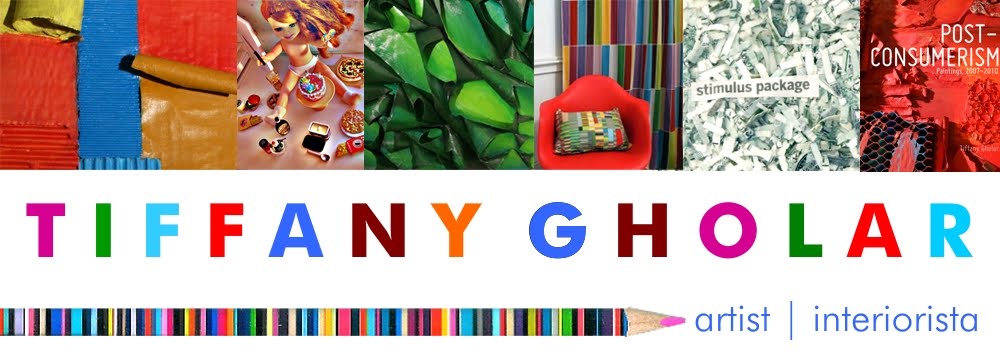
Here's a scary subject to write about for Halloween: what to do about my artist statement.
As I continue to execute the arduous task of rewriting my artist statement I've realized that my greatest obstacle in this whole process is me. I am my own worst critic and my own worst enemy. I have spent the years since my failed attempt at an MFA in fiction writing doing less and less writing. Some time during my failed first attempt at grad school, I came to loathe every word I typed or printed on the page.
I hadn't started out that way. Writing had become quite pleasurable for me. I kept journals. I wrote short stories, took writing classes every time I had a chance to, and spent the majority of my high school and college years writing (and re-writing) a novel. Eventually I got to the point where I wanted my work critiqued by increasingly more important people. It was not enough to have the people I know and love analyze my work. I wanted validation with more authority behind it. And that outlook left me open to a sense of crushing defeat when I was inevitably rejected. I my fiction classes, I began to feel that my stories were too boring for anyone to care about, and too foreign for anyone to relate to. Now I realize hat I eventually reached a point where I believed that no one would care about reading what I rite. And that is why the thins I write have become shorter and shorter. Not because of a Hemingway-like flair for concise prose. But because the fewer words I write, the less there is for anyone to criticize. Hence, my extraordinarily short artist statement:
I like to push the boundaries of what materials are acceptable for use in fine art while still creating work that is visually pleasing. My improvisational and intuitive style is all about adaptation, making beautiful things out of trash. I am gathering the fragments of consumerism, the disposable detritus of a one-time-use society. Cardboard boxes are meant to ship things, plastic bags are meant to carry things, LDPE and bubble wrap are meant to cushion things in transit from factory to store to end user, but none of these things are typically thought of as things in and of themselves. Seldom are they used as a material for making art. By using these otherwise disposable materials to create art, I am giving permanence to the impermanent. I am making the byproducts of the products we buy artistic products in their own right. It is a kind of alchemy. It is not just about salvage. It is about redemption.
I really don't know what else to say about my work, but I know it has to be longer. So why do I paint what I paint? Sometimes it is all a mystery to me. I am trying to take the time to analyze the possible motivations behind what transpires in the studio. Sometimes it all seems so automatic, almost inevitable.
Why do I use the colors I use? Because I like them. But why do I like bright colors? I think it could be because of the weather in Chicago. From October until April, the sky is generally dull and grey. It left me feeling depressed and uninspired, until the winter of 2000, when I started working in bright colors. I think the colors I choose are a counterpoint to the bleak oppressiveness of winter in this part of the country.
Am I an environmentalist? All I know is that I feel guilty about throwing things away and not reusing or recycling them. And I do find myself gravitating toward recycled products. But it's not just a philosophical choice. I really do like the aesthetics of found object art. I like the unexpected combinations of color and form that arise from using reclaimed materials.
Is my art a reaction to consumerism? I suppose in a way it is. Perhaps even a reaction against the rules and regulations forced upon me while working in retail sales.
And I did put this into my thesis:
As for the concept of Post-Consumerism, I think it comes from personal and artistic concerns. First, I have always been fascinated with the idea of using unlikely art materials. From the first time I made crafts out of Popsicle sticks and clothespins, I became aware of the fact that objects can serve more than just their intended purpose. Using found objects is also a practical choice, costing me nothing at all and requiring less money spent on art supplies. Additionally, it is a decision born of concern for the environment, as many of the materials I use are often items that would be discarded. My use of plastic bags, in particular, is motivated by the news stories I have seen and heard about the scourge of plastic bag pollution on the ecosystem. I could also say that my frustration with working in retail during the six years between college and graduate school drove me to seek out cardboard and shopping bags as art materials, two things that constantly surrounded me when I labored in the various circles of retail hell. I get to tear up the boxes and melt the shopping bags with a hot iron, and it gives me an incredible sense of release.
But I wonder if that is too long for an artist statement? Who is going to want to read all that, anyway? So much of this re-writing process depends upon one's willingness to analyze oneself. Sometimes I don't feel like doing it, but I have to. So now I'm off to do another rewrite.